Showing posts with label Lemon Trees. Show all posts

Friday, September 6, 2013

My Lemon Trees Have Yellow Leaves

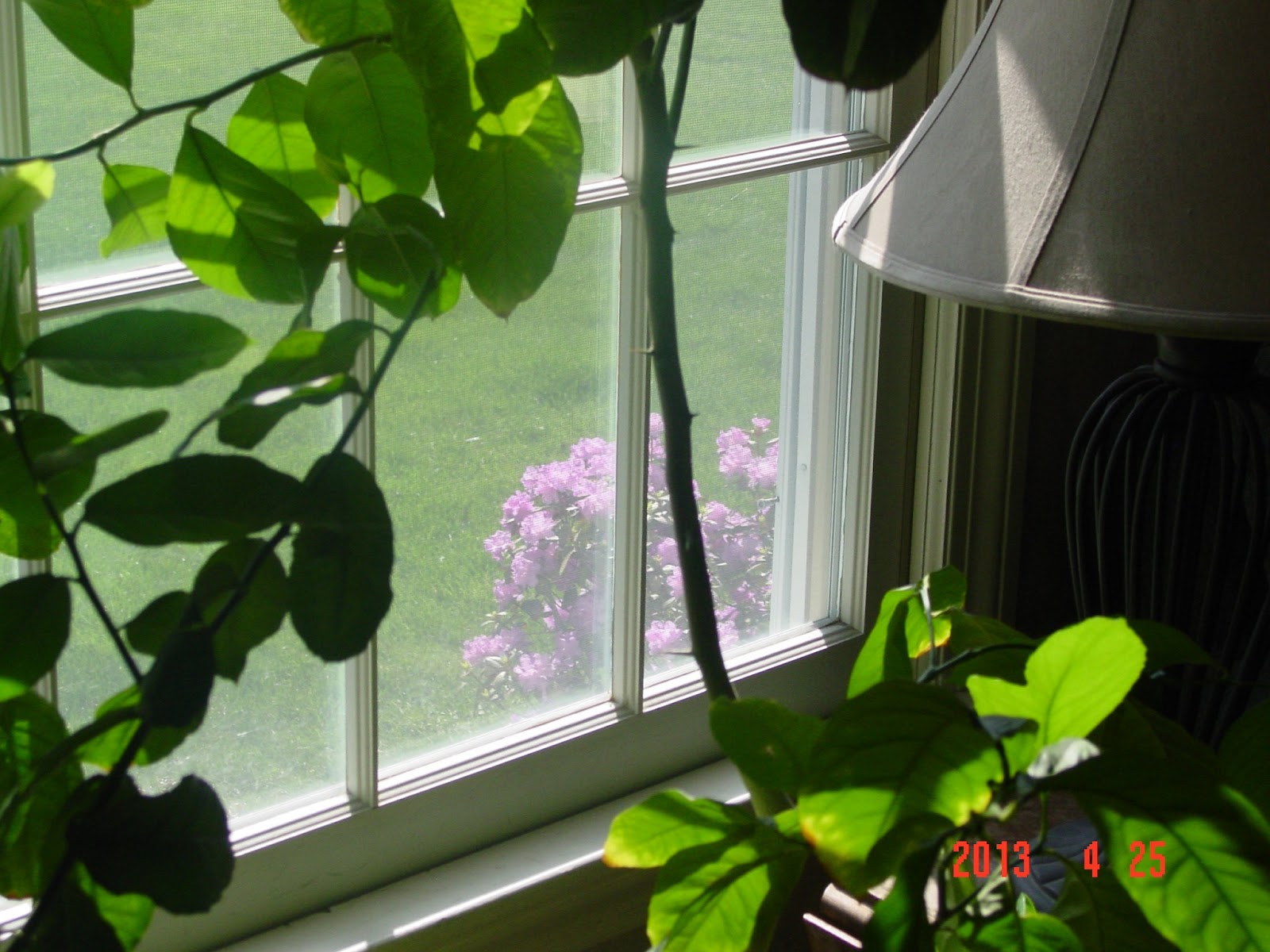
I have two lemon trees, and I am the first to admit that they don't look that great. But, I also grew these from seeds and admit that I didn't know a thing about fruit trees until I joined the Western Massachusetts Master Gardeners Association.

The trees are 6 years old and have never grown 1 lemon.  I've yet to see any flowers, and half the time I'm lucky if the trees have branches ( I used to get a little carried away with pruning).

So this year, for the first time, I brought the trees outside and I fertilized them at least every 6 weeks with a citrus fertilizer.  I did see a lot of growth and I've had to prune the trees back a little.  I really need to get bigger pots for them, but I'm afraid I won't be able to carry them in the house if I do.

Anyway, lately, the leaves look very yellow and are beginning to drop off - even with all my extra care! 


I went online to see if I could find a cause and a solution for yellowing leaves, and discovered a forum on gardenweb.com. After reading many comments, I decided to get my hands on some Dyna-Gro Foliage Pro.  Many growers of lemon trees swear by this stuff.  I bought a small bottle that I found on amazon.com and have saved the customers' reviews page.
 
Today, I mixed a teaspoon of DGFP with a gallon of water and fed the trees.  Then I used the solution half-strength (1/2 tsp. per gallon) to spray on the leaves. I simply filled a spray bottle half-full with the solution, and then filled the rest with plain water.  I hope this helps to really green the leaves up. I will post results as I see them.
 

Monday, June 10, 2013

Lemon Trees Sending Out More Growth

I'm so excited about my lemon trees, because they continue to send out lots of new growth.  I'm hoping that one day soon, I'll be seeing lots of blossoms! That would be quite a reward!  All this new growth is due to fertilization and pruning.  I'm due to fertilize the trees again this Friday (June 14).


Sunday, June 9, 2013

Fertilizing Shrubs and Trees

Blueberries  (from blueberry seminar – see blog)
  • Fertilizer - use ammonium sulfate, NOT aluminum sulfate. Be careful here!
  • Yellow leaves indicate an iron deficiency and high pH.
  • Do not need to fertilize the first year; second year - use ammonium sulfate, 2 oz. per bush; mature plantings - use ammonium sulfate, 8 oz. per bush or 1/2 lb. cottonseed meal per bush.
  • Fertilize in spring or early summer, BEFORE JULY 4.  Avoid winter injury by not fertilizing after July 4.
  • A dose of acid-based fertilizer in late fall will give the plant a good start on the growing season. Adding a good layer of compost helps fertilize the plant and adds organic matter to the soil.
Lemon Trees
  • Citrus tress need to be fertilized. They are heavy feeders and need adequate levels of fertilization in order to obtain adequate growth and production.
  • The amount of fertilizer applied to a citrus tree depends on the size of the tree and how much fruit it produces.
  • It is best to fertilize all citrus trees with a special citrus fertilizer that contains minor elements like magnesium, manganese and baron. However, if such a fertilizer is not available, use a common 6-6-6 general fertilizer. As long as the mature leaves are healthy, showing a good deep green color and full size, continue with your program.
  • Occasionally, the leaves will show yellow patterns. When this occurs, use a complete nutritional spray that can be found at most garden supply stores. It will generally contain zinc, manganese and boron. Some will also contain copper.
  • Fertilizer Program for young trees: The following recommendations are based on an 8-0-8-2-0.5-0.1 citrus mix fertilizer. Do not fertilize trees recently planted until new growth starts. Fertilize according to instructions on package when the new growth appears; then, each six weeks thereafter, until October. Do not fertilize young trees after October.
  • Application rates for fruit bearing trees: Be consistent and fertilize about the same time each year, make four applications as follows: First in March; second in May; third in August and fourth in October. The amount of fertilizer to use at each application can be determined by a simple method. Measure the tree trunk circumference in inches at its greatest point near the soil level and divide that number by the number of applications per year (four applications suggested). For example, a tree measuring 20 inches in circumference needs 20 lbs of fertilizer per year. If four applications are used per year, then 20 divided by four will make 5 lbs of fertilizer per application.
  • Using  5-10-5 fertilizer and three applications; the first in mid to late May (for spring planted roses the fertilizer should be applied after new green vegetative growth begins), the second in mid-July, and the third in the autumn after a killing frost, or very early in the spring before new growth begins.
Azaleas and PJM’s (rhododendrons)
  • Rhododendrons and azaleas benefit from an annual fertilization.
  • Apply the fertilizer either in late autumn after a hard freeze has occurred, or in the early spring.
  • Regardless of the type of fertilizer used, no fertilizer should be applied after the first week in June. Fertilizer applied after this date may spur late season growth that does not have sufficient time to harden before freezing temperatures occur in the fall, and late growth will likely be burned or killed.
 

Saturday, May 18, 2013

Lemon Tree


James and I started the 2 lemon trees, seen in the background of this photo, when he was 6 years old.... He's 12 now, making these trees 6 years old.  The seeds come from an organic lemon I picked up from Whole Foods Market, and miraculously, they grew.  We have yet to see any flowers, but then again, I haven't really concerned myself with finding out how to properly care for them.  All that has changed, and I'm determined to get at least 1 lemon from them!


I learned in my WMMGA class that I was not properly pruning these lemon trees, and that a certain pyramid shape should be encouraged.  My trees didn't have the proper shape, so I had to prune back the top of one, which was top-heavy.  Also, as seen in the above picture, it could use some more branches.  I learned how to do what's called "notching" in one of my classes, so about 2 or 3 weeks ago I tried it on my trees.  I also bought some fertilizer called Citrus Tone to put around the plants.  Almost immediately, I saw new growth!


I'm still not seeing branches in the middle of the trunk, or the beginning of growth, but I will keep at it.  I have also been bringing the trees outside each day, so that hopefully they will get the air, heat, and sunshine they require.  And of course, if they ever get any blooms, they're going to need the bees!

Here are some useful links on notching:

Monday, May 6, 2013

Hardening Off

After it was suggested that my plants have "fungus mites", I was told to start bringing my seedlings out into the light and air.  So, I decided to start hardening them off.
 
 
I know the goal of hardening off is to get the young plants gradually used to hotter and colder temperatures.  The other night, I left the plants out until it reached 50F.  The tomato plants looked like they were cringing:

They did recover, and I've been putting them outside and keeping them there until the temperature hit 48F.  When I brought the seedlings in, the eggplant seedlings, cantaloupe seedlings and cucumber seedlings didn't look so hot.  They looked very pale, and like they were losing their green color.

I went on line to see if I could find out more about hardening off.  I learned that certain plants should not be kept outside in temperatures below 60F, because they are tender.  I also read that the hardening off process should begin a week or 2 before planting day.

I have decided to bring the plants in when it gets down to 60F, and take a couple of weeks to fertilize the plants a bit.  I am starting with Super Thrive.

Recommendations Taken From Washington State University
  1. Harden off gradually, so that seedlings become accustomed to strong sunlight, cool nights and less-frequent watering over a 7-10 day period.
  2. On a mild day, start with 2-3 hours of sun in a sheltered location.
  3. Protect seedlings from strong sun, wind, hard rain and cool temperatures.
  4. Use an automatically opening cold frame, if you have one.
  5. Increase exposure to sunlight a few additional hours at a time and gradually reduce frequency of watering, but do not allow seedlings to wilt. Avoid fertilizing.
  6. Keep an eye on the weather and listen to the low temperature prediction. If temperatures below the crop's minimum are forecast, bring the plants indoors or close the cold frame and cover it with a blanket or other insulation.
  7. Know the relative hardiness of various crops. Onions and brassicas are hardy and can take temperatures in the 40's. After they are well hardened off, light frosts won't hurt them. Warm-season crops such as eggplants, melons and cukes prefer warm nights, at least 60° F. They can't stand below-freezing temperatures, even after hardening off. (See chart below for more detail.)
  8. Gradually increase exposure to cold.
  9. Root-prune plants in flats a week before setting out. Use a sharp knife and cut down to the bottom of the flat between the plants. Water thoroughly.
  10. After transplanting to the garden, use a weak fertilizer solution to get transplants growing again and to help avoid transplant shock.

Recommended Minimum Temperatures
Hardy40° F.Broccoli, Brussels sprouts, kohlrabi, cabbage, onions, leeks, parsley
Half-Hardy45° F.Celery, Chinese cabbage, lettuce, endive
Tender50° F.Squash, pumpkin, sweet corn
60° F.Cucumber, muskmelon
65° F.Basil, tomatoes, peppers
 
This chart has been taken from Washington State University